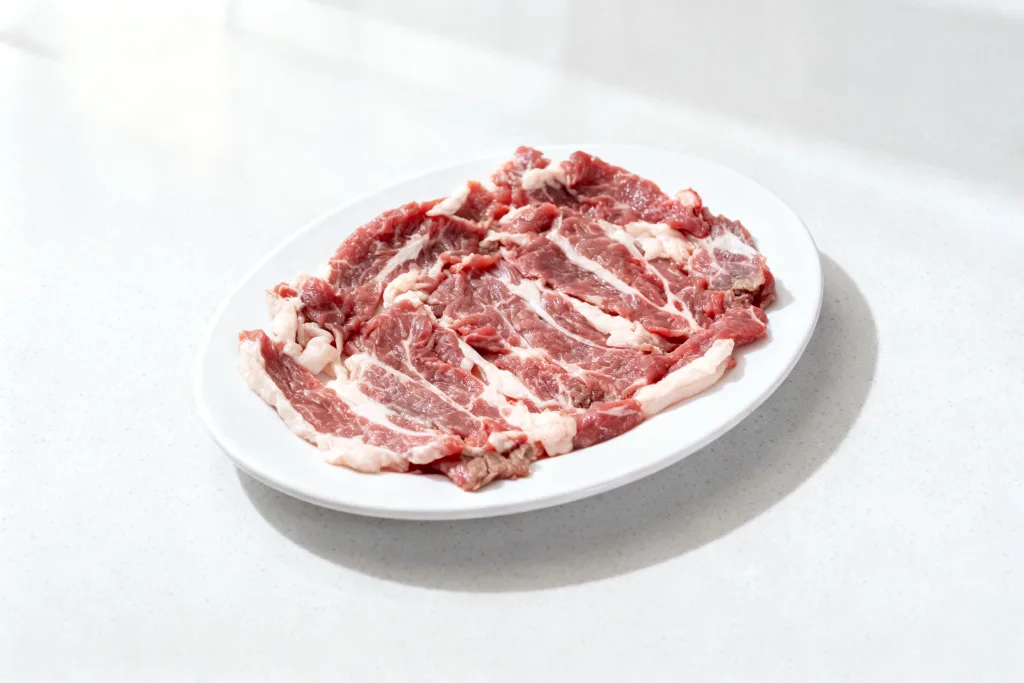
Instant-Boiled Mutton (Copper-Pot Hotpot)
Paper-thin slices of lamb swished for seconds in plain boiling water in a charcoal-heated copper pot, then dipped in a thick sesame sauce.
How to eat it
Swish each slice for about ten seconds until it just loses its pink, dip it in the sesame sauce and eat at once. The broth is plain water with ginger and spring onion by design, so do not expect a flavoured base like Sichuan hotpot. Cook the vegetables and glass noodles at the end, when the broth has picked up flavour from the meat.
The story behind the dish
Copper-pot mutton is the northern answer to hotpot and is closely tied to Beijing's Hui Muslim community, which is why so many of the classic shops are halal. The charcoal chimney pot keeps the water at a rolling boil, and the whole point is the quality of the lamb, traditionally hand-sliced from the leg and shoulder so thin that it cooks in seconds. The sesame dip rather than a spicy broth is what separates it from the hotpots of the south-west.
For reference
Every kitchen does it its own way. What follows is the typical version — ingredients, heat and price shift from city to city and from one restaurant to the next, so take it as a guide rather than a fixed recipe.